A memorial that finally said the names.
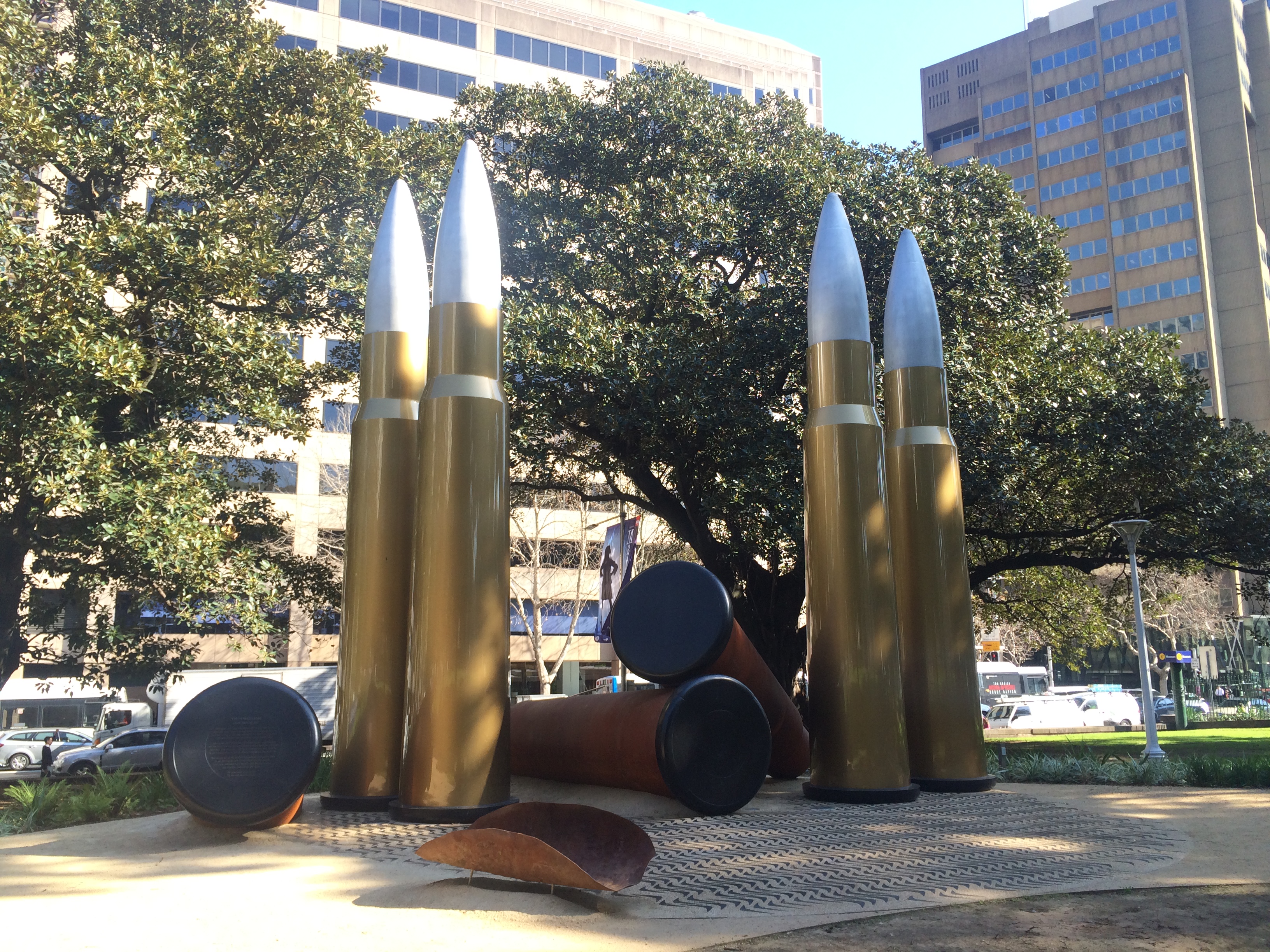
In the centre of Sydney, near the war memorial in Hyde Park, stand seven tall shells and three fallen ones, cast in bronze and standing several metres high. The work is called Yininmadyemi, Thou Didst Let Fall, and it was made by the artist Tony Albert, a Girramay, Yidinji and Kuku Yalanji man, to honour the Aboriginal and Torres Strait Islander men and women who served in Australia's wars and were, for most of a century, written out of the story they had fought for.
Indigenous Australians enlisted in every conflict, often while barred from voting, from citizenship, from the pubs that served the men they fought beside. Many came home to have their land taken while they were away, their service unrecorded, their names left off the memorials. Albert's own grandfather was one of them.
So the artist did what memorials are supposed to do and had refused to do. He made their absence physical and permanent, in the most public place he could claim, at the scale of the official monuments that had left them out. The standing shells are the ones who survived. The fallen ones are the ones who did not. It is not a plaque tucked in a corner. It stands up, in bronze, in the middle of the city, and asks to be walked around.
Albert's wider practice collects what he calls Aboriginalia, the kitsch objects that turned Aboriginal people into decoration for the white home, and turns them back into art that speaks. He takes the imagery used to diminish his people and makes it testify instead.
The memorial is a lesson in who gets to be remembered, and in the creative act of insisting on it. History is not only what happened. It is what we choose to build, name and keep. Albert understood that a nation's memory is designed, and that if you are left out of the design, you can pick up the tools and correct it.
Whose story is missing from the record you work in? Build the thing that puts it back.