
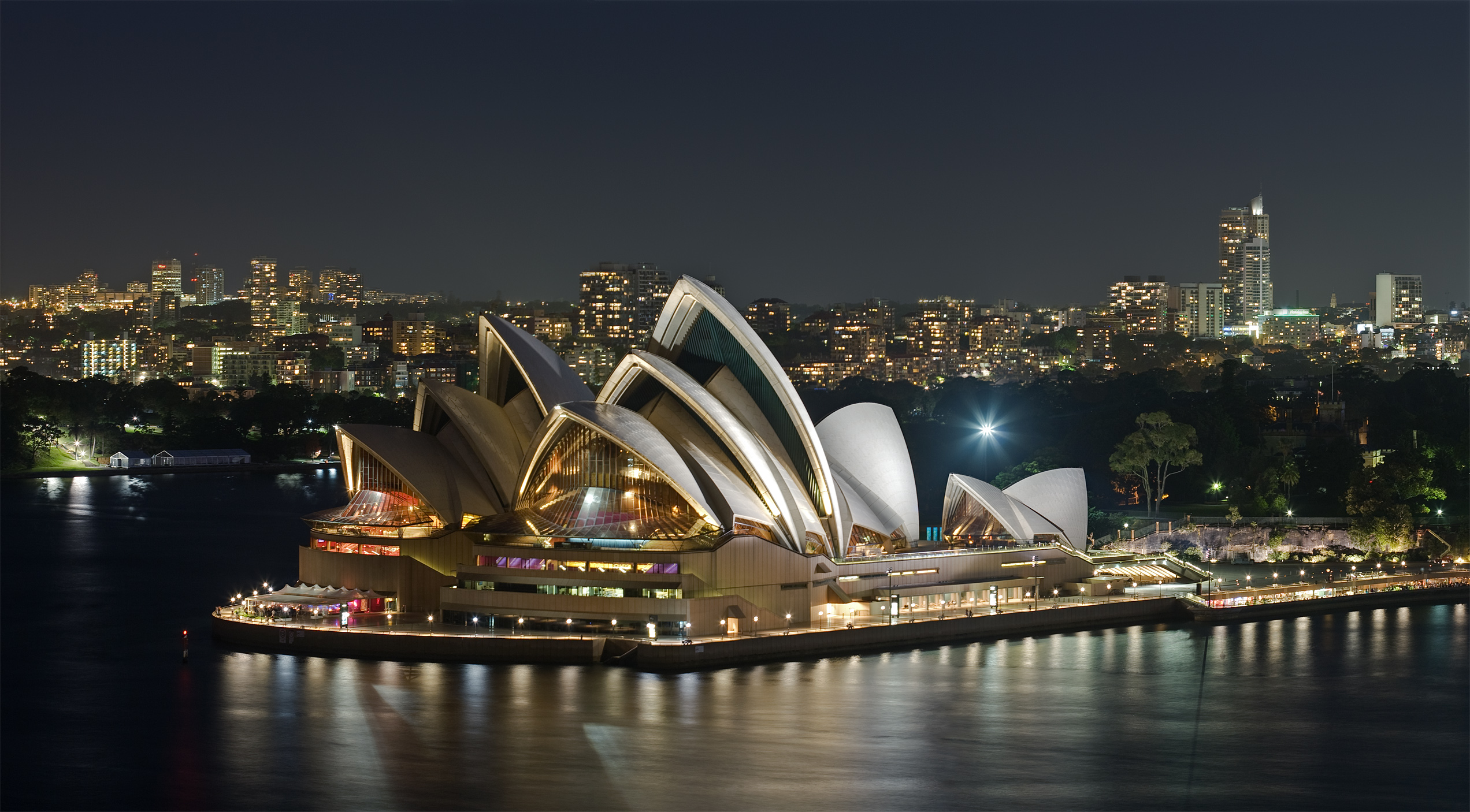
The building that shouldn't have worked.
In 1957 a little-known Danish architect named Jørn Utzon won an international competition to design an opera house on Sydney Harbour, reportedly rescued from the pile of rejected entries by one judge who saw something the others had missed. His drawing showed a cluster of great white shells rising from the water like sails, or waves, or the segments of an orange. It was breathtaking, and nobody, including Utzon, yet knew how to build it.
The shells were the problem. Their curves were so complex that engineers spent years, and the emerging power of early computers, trying to make them stand up. Utzon's own breakthrough came, the story goes, from realising that all the different shells could be cut from the surface of a single imaginary sphere, so that one curvature, repeated, could generate the whole roof. It is one of the most elegant solutions in the history of building.
The making of it was a tragedy for its maker. Costs ballooned, politics turned, and a new government withheld his fees and made his position impossible. Utzon resigned in 1966, left Australia, and never returned to see it finished. The building was completed by others, and when it opened in 1973 he was not invited and not mentioned. He watched from the other side of the world as his masterpiece became one of the most recognised structures on the planet.
There was a long, slow reconciliation. Decades later, Sydney sought him out, made him the guiding hand for the building's future, and awarded him architecture's highest honour, with the Opera House named in the citation as one of the undeniable masterpieces of human creativity. He died in 2008 having been restored, in the end, to his own creation.
The lesson is uncomfortable. A vision far enough ahead of its time will not fit the systems built for lesser work, and the person who holds it often pays. Utzon's shells could not be drawn by the tools of the day or funded by the patience of the day, and both the tools and the patience failed him before the world caught up. The idea survived anyway.
The idea worth having might be the one nobody yet knows how to build. Draw it anyway.


