
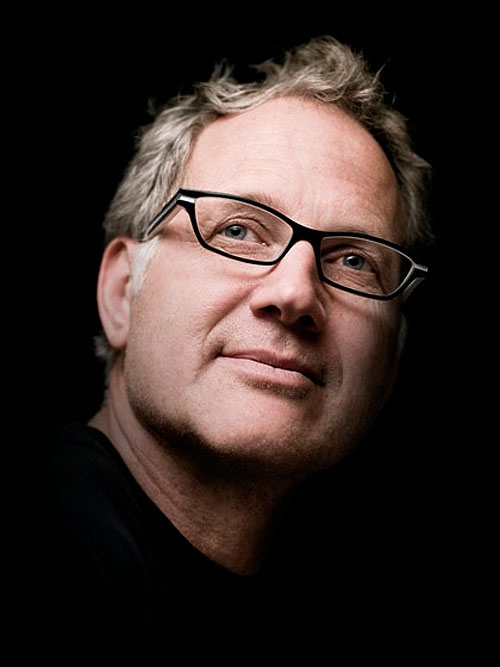
The architect who drew the future onto your feet.
Before Tinker Hatfield designed the most recognisable sneakers on earth, he designed buildings. He studied architecture at the University of Oregon, pole-vaulted under a young coach named Bill Bowerman, and joined Nike to work on stores and offices. The shoes came later, almost by accident, when the company asked its architects whether any of them wanted to try designing footwear.
Hatfield brought an architect's habits to a designer's problem. Architects make the invisible visible. They expose structure. They let you see how a thing holds itself up. So in 1987, when Nike had a cushioning technology most people could not feel and did not believe in, Hatfield did something no shoe designer had done. He cut a window into the sole. The Air Max let you see the air. You could look at the thing and understand the promise it was making.
That single move, borrowed straight from the Centre Pompidou in Paris, where the building wears its pipes and escalators on the outside, changed how a generation related to a product. Belief followed sight. If you could see it, you could trust it.
Hatfield went on to design the Air Jordan III and the run of Jordans that followed, translating a single athlete's ambition into objects millions of people wore to feel closer to it. He designed the self-lacing shoe from Back to the Future and then, decades later, helped make it real. He treated each shoe as a story with a deadline, and he was never precious about where the ideas came from. A Japanese garden. A fighter jet. The way his own foot moved.
The lesson underneath his career is quiet and useful. He did not abandon architecture to design shoes. He carried architecture into shoes. The discipline he trained in became a lens he pointed at a smaller object, and the object got better because of everything that had nothing to do with it.
This is how creative range actually works. Not by knowing many fields shallowly, but by taking the deep habits of one field and letting them travel. You are allowed to bring your whole self to a small brief. The window in the shoe was really a window into a way of thinking.
Look at what you make. Ask what it is hiding that it should be showing.


