
A blind teenager invented reading by touch.
Louis Braille lost his sight as a small child, after an accident in his father's leather workshop led to an infection that spread to both eyes. Born into a world that mostly wrote off blind people as helpless, he was fortunate to reach a school for the blind in Paris, where he discovered the frustrating state of the art. Blind readers had a few enormous, expensive books with raised print letters that were slow to feel out and impossible to write.
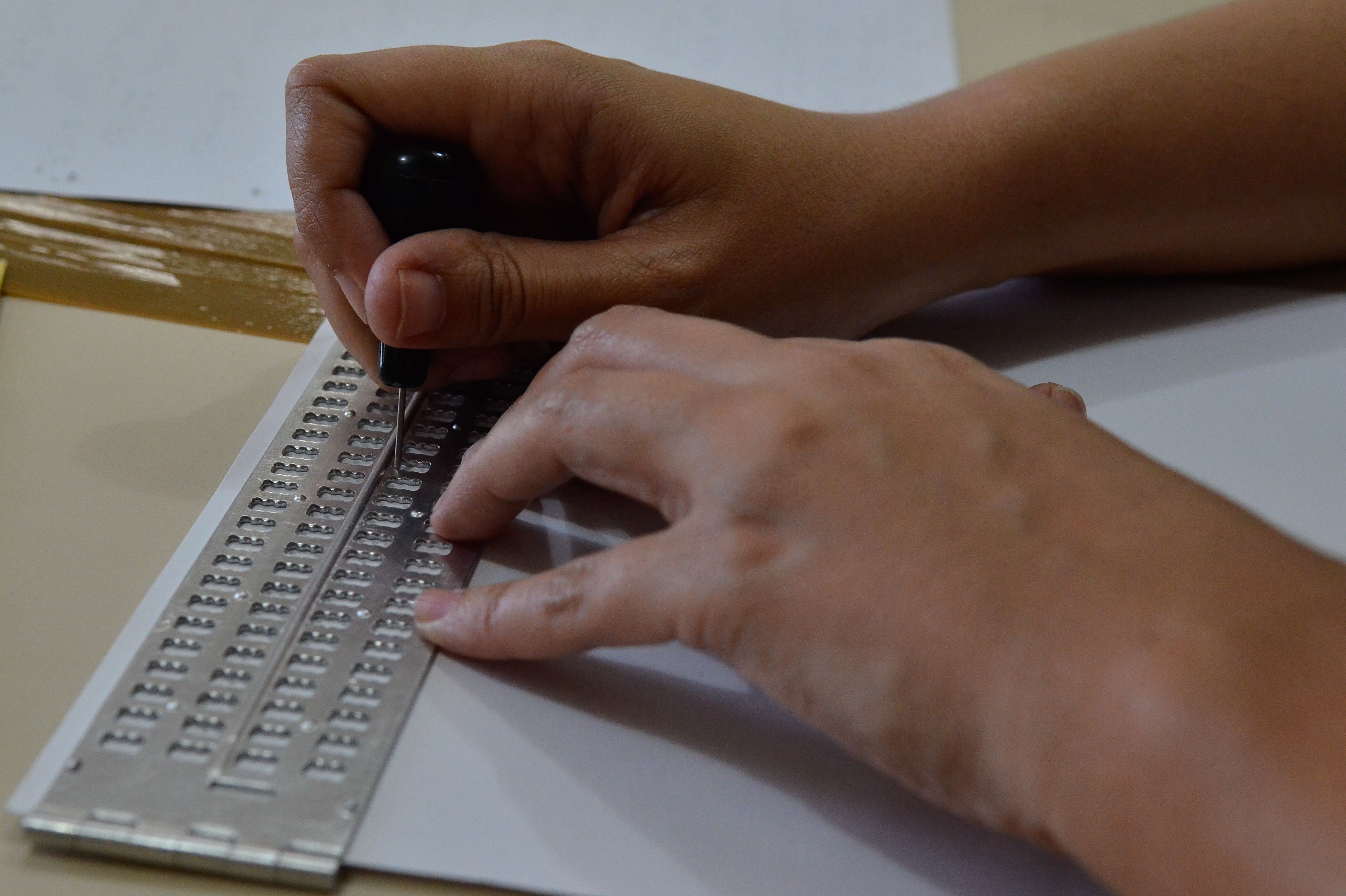
As a teenager, Braille learned of a system the military had experimented with, a code of raised dots that soldiers could read in the dark by touch. It was too complex to be practical, but the boy saw the seed in it. Over the following years, still a student, he refined it into something far simpler and more powerful, a cell of at most six dots, whose different arrangements could represent every letter, number and mark, and could be read and, crucially, written with a simple tool.
He had it essentially finished at fifteen. The elegance is that a single fingertip covers one cell, so a fluent reader can move across a line as fast as thought, and the same tool that writes it lets a blind person compose their own words rather than only receive someone else's. It turned blind people from an audience into authors.
The establishment, as it so often does, resisted. Sighted teachers preferred systems that looked like their own writing. Braille was not widely adopted until after his death from tuberculosis at forty-three, but adopted it was, across languages and continents, and it remains the standard means by which blind people read and write today.
The lesson is about who is qualified to solve a problem. The best solution to blindness was not designed for blind people by the sighted. It was designed by a blind teenager who lived the problem from the inside, and who understood, as outsiders rarely do, that the goal was not to imitate sighted reading but to invent something better suited to the hand.
For the problem you are trying to solve, are you designing from the outside, or handing the tools to the people who live inside it?


